What if the Moon landing was staged?
The famous “proof”, the photos, and why I'm sure they really went. Mostly because of a few mirrors.
The famous “proof”, the photos, and why I'm sure they really went. Mostly because of a few mirrors.
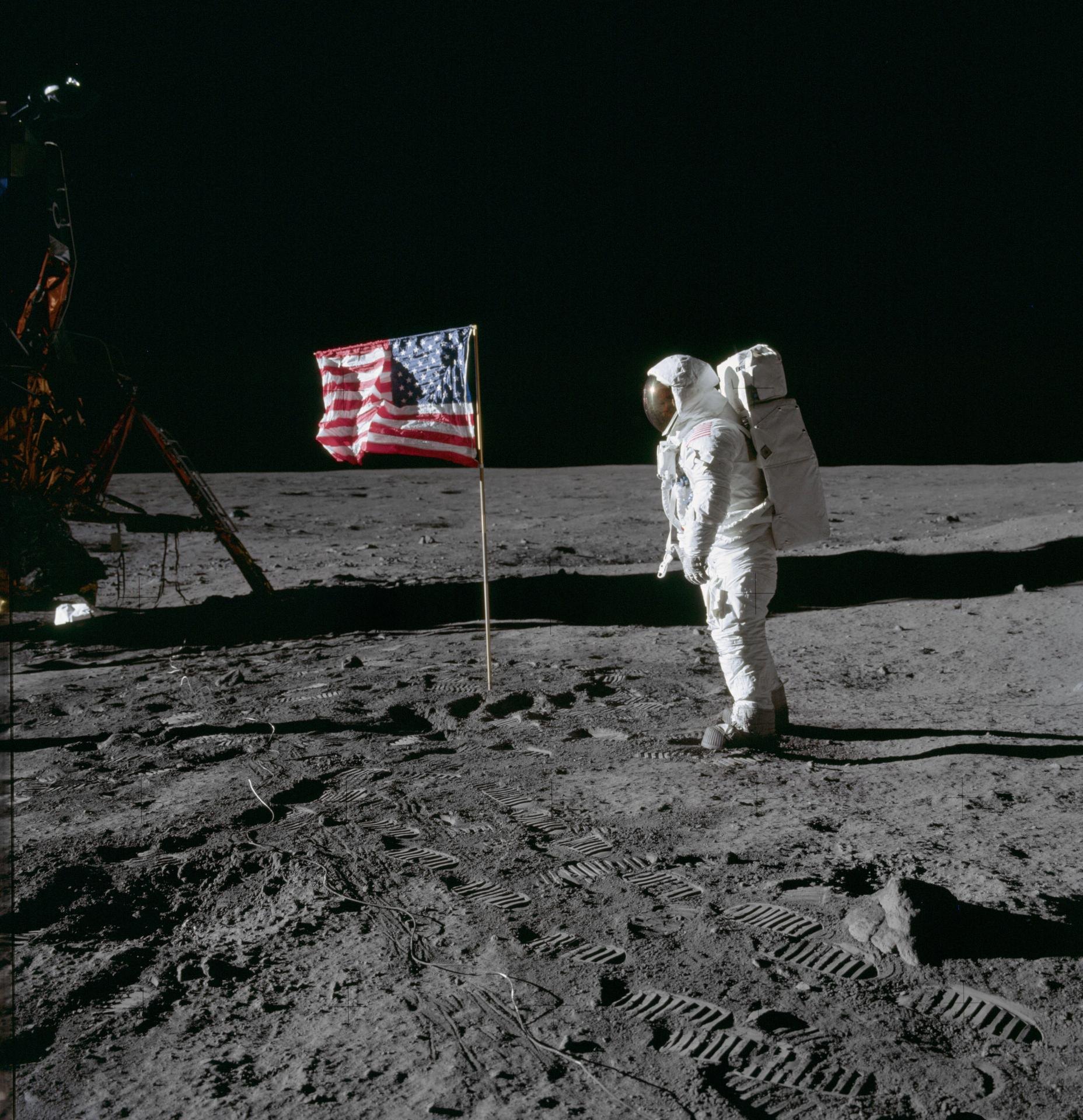
Look at the photo at the top. Buzz Aldrin, the American flag, the lunar module on the left, and a pitch-black sky. It's one of the most famous photographs ever taken. And for some people, it's also the evidence that the whole thing was faked. The flag looks like it's waving. There are no stars. So which is it?
The Moon landing conspiracy is probably the most famous one of all. The claim is that in 1969, NASA didn't actually land on the Moon, and the whole thing was filmed in a studio to beat the Soviet Union in the space race. It really took off in 1976, when Bill Kaysing published a book called "We Never Went to the Moon". Since then it's never quite gone away.
If you've ever gone down this rabbit hole, you'll know the classics:
The flag is waving, but there's no wind on the Moon. It does look like it's waving. But the flag had a horizontal rod along the top to hold it out, and it moved because the astronauts were twisting the pole into the ground. With no air to slow it down, it kept swinging longer than it would on Earth. In still frames it stays perfectly still.
There are no stars in the sky. True, and every photographer knows why. The lunar surface in sunlight is extremely bright. If you expose for a bright subject, faint stars disappear. Try photographing a lit-up building at night and see how many stars you get.
The shadows aren't parallel, so there must be studio lights. On uneven ground, shadows from a single light source fall at different angles. Add perspective from a wide lens and they look even stranger. I see this in my own photos all the time.
The radiation in the Van Allen belts would have killed them. The belts are real and dangerous if you stay in them. Apollo crews passed through fairly quickly, on a path that avoided the worst parts. The total radiation dose they received was low, roughly in the range of a few medical scans.
Faking the Moon landing in 1969 would arguably have been harder than actually going.
This is the part that settled it for me. Apollo astronauts left retroreflectors on the Moon, basically special mirrors. Observatories on Earth still fire lasers at them today and time how long the light takes to bounce back. That's how we know the Moon is slowly drifting away from us, about 3.8 cm a year.
On top of that, the Apollo missions brought back around 382 kg of Moon rock, which has been studied by scientists all over the world. NASA's Lunar Reconnaissance Orbiter has photographed the landing sites from orbit, showing the hardware and even the astronauts' tracks. And the Soviet Union, who had every reason to expose a fake, tracked the missions and never claimed it was staged.
Thousands of people worked on Apollo. Keeping that many people quiet for more than fifty years would be its own miracle.
I get why people doubt it. It's genuinely hard to believe. The computers were weaker than the phone in my pocket, and then we just stopped going for decades. That gap makes it feel unreal. Mistrust of governments doesn't help either.
But "it sounds unbelievable" isn't the same as "it didn't happen". Sometimes humans really do pull off something incredible.
Verdict: they went. The mirrors are still up there to prove it.
— Desly