What if Atlantis was real?
Plato's lost city, sunken ruins, and where myth ends and history begins.
Plato's lost city, sunken ruins, and where myth ends and history begins.
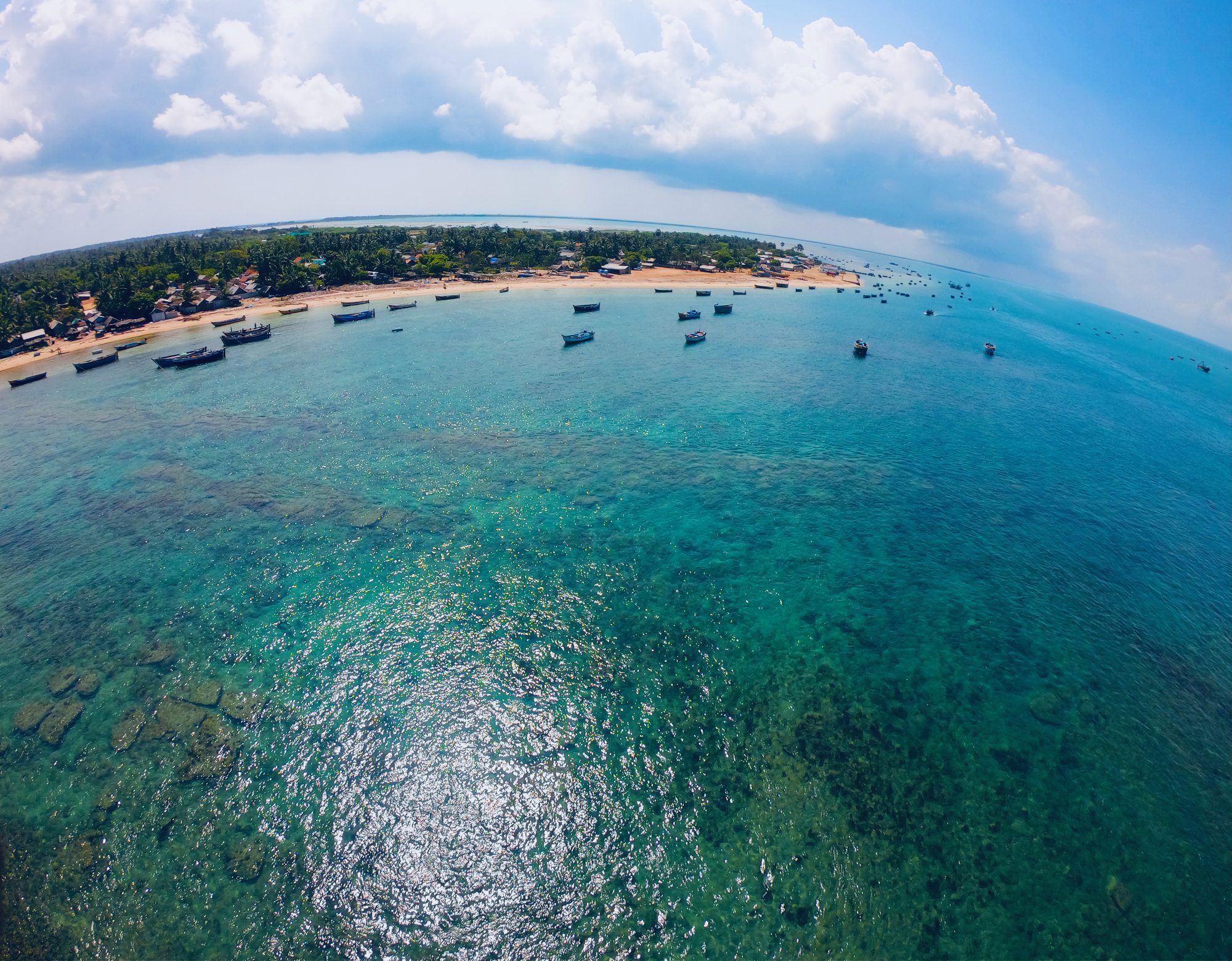
Every time I look down at clear, shallow water, like in the photo above, part of my brain goes looking for ruins. Square shapes. Old walls. A road under the sand. I think that's the Atlantis effect. Once you've heard the story, the sea never looks quite the same.
Here's something many people don't know: almost everything we know about Atlantis comes from one person. The Greek philosopher Plato described it around 360 BC in two of his dialogues, Timaeus and Critias.
In his telling, Atlantis was a powerful island empire beyond the "Pillars of Hercules", which is usually taken to mean the Strait of Gibraltar. It was rich, advanced and proud, and it went to war against Athens. Then, as punishment from the gods, it sank into the sea "in a single day and night of misfortune". Plato said all of this happened about 9,000 years before his time.
Almost everything we know about Atlantis comes from one man, writing a story with a moral.
People have been trying to find it ever since. A few of the favourites:
Santorini. Around 1600 BC, a massive volcanic eruption tore apart the island of Thera, today's Santorini, and hit the Minoan civilisation hard. An advanced island culture, a sudden disaster, the sea involved. It's the most popular real-world candidate, although the dates and location don't match Plato exactly.
The Bimini Road. Off the Bahamas there's an underwater line of flat stones that looks a lot like a paved road. Geologists say it's natural beachrock that cracked into blocks. It still looks amazing.
The Eye of the Sahara. The Richat Structure in Mauritania is a giant set of rings visible from space. Some people say its circles match Plato's description of Atlantis. Geologists say it's an eroded dome of rock. And it's in the middle of a desert, which is a strange place for a city that sank into the sea.
No archaeological evidence for Atlantis has ever been found. No ruins, no artefacts, no writing from anyone else at the time mentioning it. Most historians think Plato invented it as a lesson: a story about a proud, powerful nation that gets too big for itself and is destroyed. He used stories like this a lot to make philosophical points.
The modern Atlantis craze mostly started in 1882, when an American writer called Ignatius Donnelly published a bestselling book claiming it was real and the source of all ancient civilisations. That book did more for Atlantis than Plato ever did.
I don't think Atlantis was a real place. But I understand why the story has survived for more than 2,000 years. It's about something we're all a little afraid of: that everything we build could disappear, and the sea would just carry on.
And who knows. The ocean is mostly unexplored. I'll keep looking down at clear water anyway.
Verdict: a brilliant story, probably not a real place. Santorini is the best "maybe".
— Desly