What if the Bermuda Triangle is cursed?
Lost ships, missing planes, and what the numbers actually say about the world's most famous patch of sea.
Lost ships, missing planes, and what the numbers actually say about the world's most famous patch of sea.
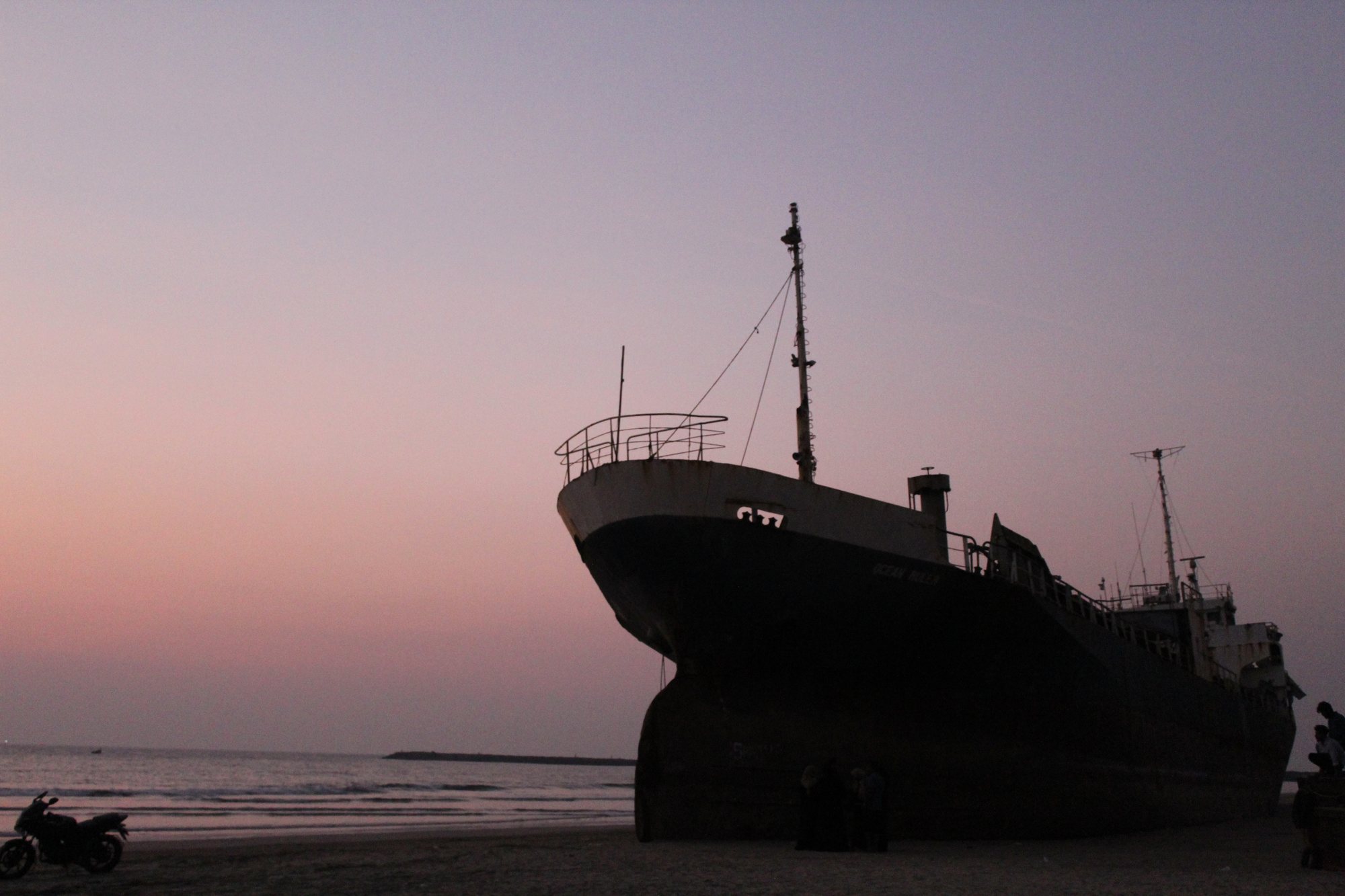
I took the photo above on a beach at dusk. A whole ship, run aground and left on the sand, black against a pink sky. Standing next to something that big, built to survive the ocean, and seeing the ocean win anyway, you understand why sailors have always told scary stories about the sea. It's beautiful, it's huge, and it doesn't care about you at all.
The Bermuda Triangle is the most famous of those stories. A rough triangle of the Atlantic between Miami, Bermuda and Puerto Rico, where ships and planes supposedly vanish without a trace.
The name was coined in 1964 by a writer called Vincent Gaddis, in a magazine article. Ten years later, Charles Berlitz published "The Bermuda Triangle", which became a huge bestseller. Explanations ranged from strange magnetic fields to alien abductions to leftover technology from, yes, Atlantis.
And there were real disappearances to point to. In 1918, the US Navy ship USS Cyclops vanished with about 300 people on board, and no wreck has ever been found. In 1945, five US Navy bombers known as Flight 19 disappeared during a training flight, and a rescue plane sent to find them was lost too. Stories like that are genuinely chilling.
The ocean doesn't need a curse to be dangerous. That's the scary part.
Here's what surprised me when I looked into it. The Bermuda Triangle isn't statistically more dangerous than other busy stretches of ocean. The US Coast Guard doesn't recognise it as an especially dangerous area. Lloyd's of London, the insurance market, which knows a thing or two about ships sinking, doesn't charge higher rates to sail through it.
It's one of the busiest shipping and flight areas in the world. More traffic means more accidents, simply by numbers. Add the Gulf Stream, a fast, powerful current that can scatter wreckage quickly, sudden tropical storms, and some very deep water, and you have plenty of reasons for things to go wrong without anything supernatural.
In 1975, a librarian called Larry Kusche went back to the original records of the famous cases. He found that many of the "mysteries" had been exaggerated, some ships had sunk in storms that the legends didn't mention, and a few hadn't even been in the Triangle at all.
Because it's a great story. A mysterious triangle on the map, a few real tragedies, and the human brain's love of patterns. Once something has a scary name, every accident nearby becomes "another one".
And there's something comforting about a curse, in a strange way. A curse means there's a reason. The truth, that the ocean is simply powerful and sometimes things go wrong, is harder to sit with.
Verdict: not cursed. Just a busy, stormy, beautiful, dangerous piece of sea. Like a lot of the sea.
— Desly