The cat who taught me to wait
My first real camera, a lot of blurry photos, and the most patient teacher I've had.
My first real camera, a lot of blurry photos, and the most patient teacher I've had.
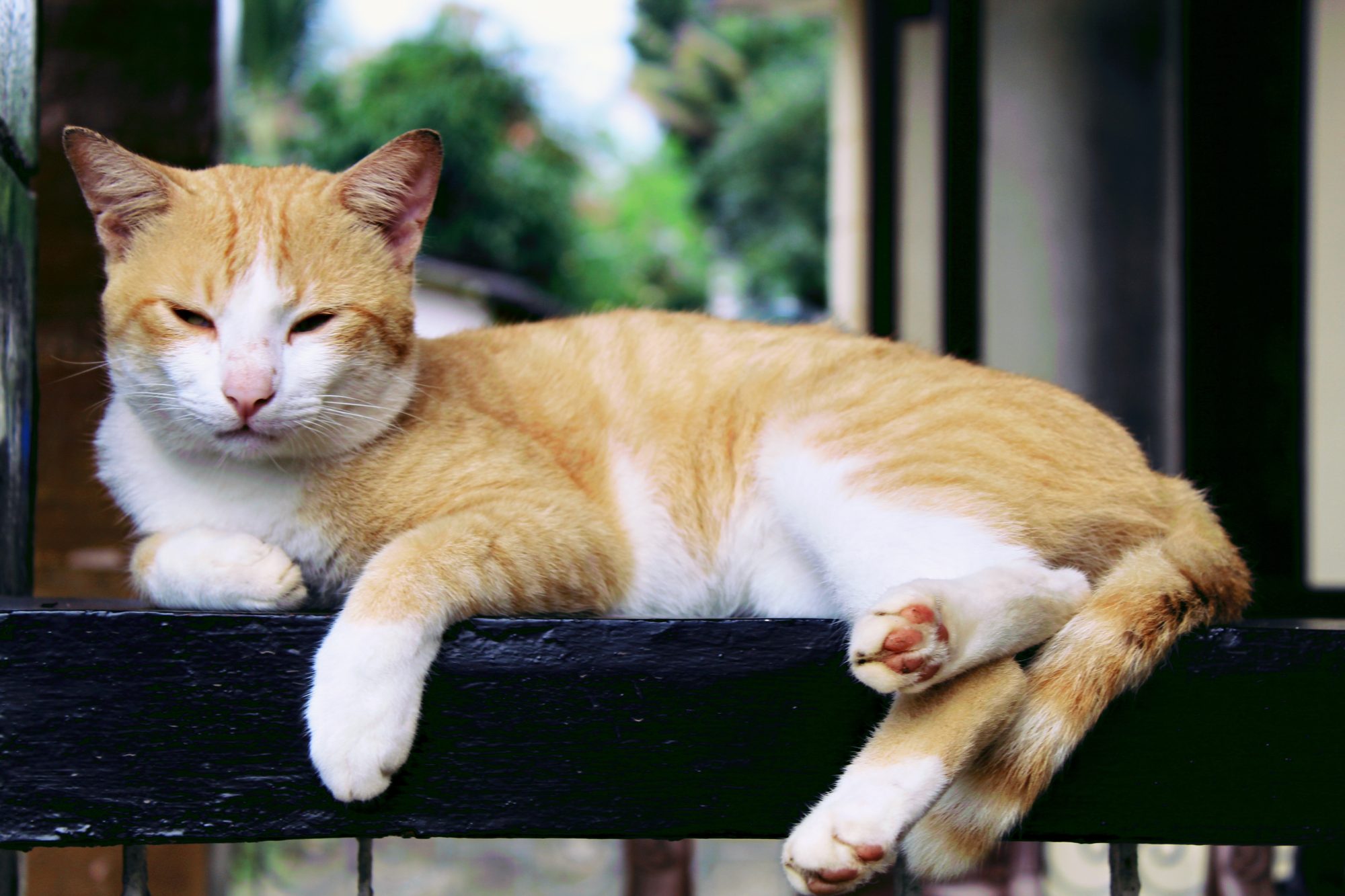
The Canon 4000D is not a fancy camera. It's the one shops recommend when you say "I want to get into photography" and then mention a budget. When I bought it, for the first few weeks I shot everything on the green auto mode, because the dial had too many letters on it and I didn't want to admit I didn't know what half of them meant.
The photos were fine. They looked like phone photos, just heavier.
Then there was this cat. Orange and white, lived nowhere and everywhere, and had a favourite spot on a black metal rail outside. Every afternoon around four it would stretch out there like it owned the place. I started trying to photograph it mostly because it was the only subject that would sit still long enough for me to fiddle with settings.
I switched to aperture priority because a YouTube video told me to. Opened the lens up as wide as the kit lens would go. Zoomed all the way in. Suddenly the background melted into this soft green blur and the cat looked like it was in a magazine. I genuinely said "oh" out loud.
Most of the photos were still bad. The focus would land on the rail instead of the eyes. Or the cat would blink. Or yawn, which is either the worst or the best photo depending on your mood. I took maybe two hundred pictures of that one animal over a couple of weeks.
The cat never moved for me. I had to learn to move for the cat.
What it actually taught me wasn't about aperture. It was about waiting. You don't take a good photo of a cat. You sit near a cat for twenty minutes until it decides to look at you for half a second, and you'd better be ready when it does.
That's become how I shoot pretty much everything now. People, light, streets. I get set up, I get quiet, and I wait for the half second.
I don't know where the cat is now. I hope it found a warmer rail.
— Desly